

There is a particular kind of afternoon every parent recognises: the rain has set in, the park is out of the question, and the tablet is starting to look like the only realistic option. What do you reach for when the choice seems to lie between “let’s do a huge craft project that takes an hour to clear up” and “fine, put a film on”? Paint by numbers is a strong contender, offering a considerably gentler alternative.
If you have never tried it, ready-made paint by numbers kits are the easiest way in. The canvas arrives already printed with numbered shapes, every shape corresponds to a numbered pot of paint, and nobody has to make any decisions about composition or subject matter. That last part matters considerably more than it sounds, because “I don’t know what to paint” is the sentence that ends most rainy day art sessions before anybody has picked up a brush.
Here is how to get started, what to expect, and how to make it work for a household with different ages and attention spans.


Why paint by numbers works so well for families
Paint by numbers is a guided painting technique in which a canvas is divided into numbered shapes and each number corresponds to a particular colour of paint, so the finished picture emerges simply from following the code. Most children, and plenty of adults, freeze when they are handed a blank sheet of paper, and this approach removes the blank page altogether, because every compositional decision has already been made and all that remains is the enjoyable part: loosening the paint with a little water, choosing a brush and filling in a shape.
It also gives everyone the same job, which is the real secret of why it suits mixed ages. A seven-year-old can take on the big, forgiving areas while an older sibling or a parent works on the smaller, fiddlier ones, and because nobody is being “taught” or graded, you simply end up sitting around the table painting quietly, which is rarer than it should be in most households.
There is a calming effect too, and a useful pattern to watch for: the repetitive rhythm of following one number to the next tends to occupy the hands just enough that conversation starts to wander, which is often precisely when children tell you what has really been going on at school.
What you need before you start
The encouraging news is that a beginner needs surprisingly little, because a properly assembled kit covers almost everything. Davincified’s kits, for example, come with a pre-primed numbered canvas, numbered acrylic paint pots matched to it, three wooden-handle brushes in different sizes and an instruction card that tells you which pot goes with which number. Everything arrives together in one box, which means there is no last minute dash to the craft shop with a restless child in tow.
On top of the kit, set yourself up with:
- A wipeable table, or alternatively an old tablecloth or some spare newspaper, to protect the furniture
- A jar of water for rinsing brushes
- Kitchen roll for dabbing excess paint
- A plate or lid if you want to thin a little paint before you use it
- Old t-shirts, because acrylic and nice jumpers do not mix
If you are painting with younger children, it helps to open only a few pots at a time, because a whole row of uncovered paint is an invitation to chaos, particularly when enthusiastic elbows are involved.
Choosing your first kit
For a first attempt, go for fewer colours and bigger shapes. A 24 colour design contains larger areas to fill, which produces quicker visible progress and considerably less frustration, whereas the more intricate 36 or 48 colour designs look spectacular but are better reserved for a later project, once the family has become comfortable with the process.
Think about the picture itself, too, because animals, flowers and simple landscapes are all forgiving subjects where small slips vanish into the general texture, and it is worth choosing something the children genuinely like since they will be looking at it across several sessions.
As a rough guide, a first 24 colour kit usually takes somewhere between 8 and 12 hours in total. That sounds substantial, but the effort is distributed across several rainy afternoons, and that is precisely the appeal: the canvas becomes an ongoing family project that people return to, rather than a one-off distraction that is forgotten by teatime.
How to paint it, step by step
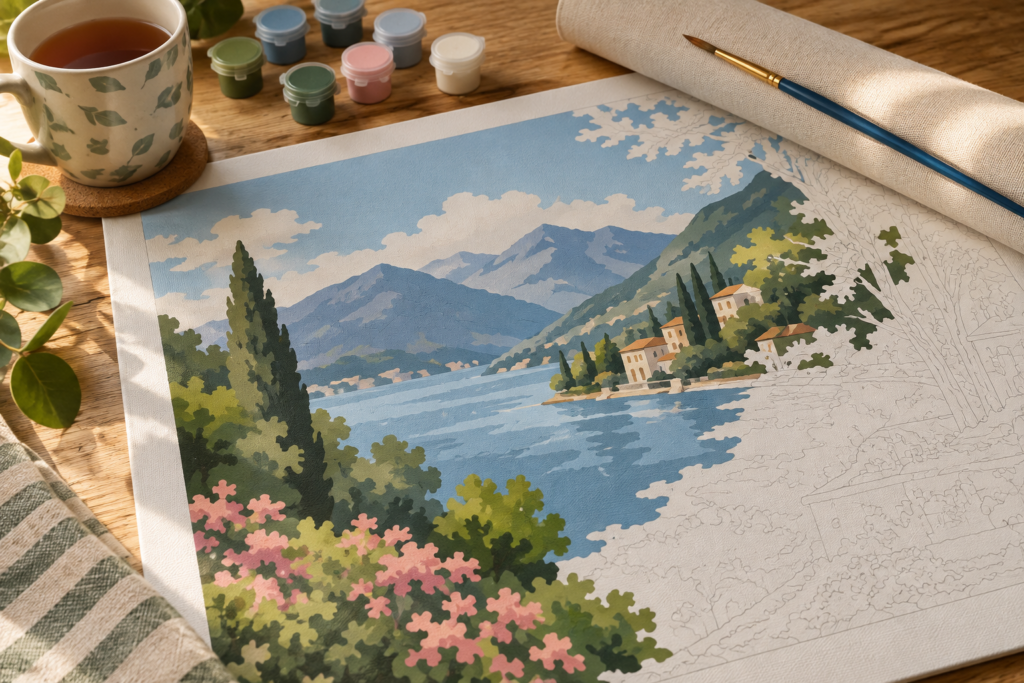
- Lay everything out. Spread the canvas flat, line up the pots in number order and keep the instruction card where everyone can see it.
- Start with the largest areas. Large shapes give a quick sense of progress, and that early win keeps children interested.
- Use thin layers. Paint that is ready to use from the pot can be thinned with a drop or two of water if it feels thick. Numbers and lines can show faintly after the first coat, so a second thin layer tidies things up.
- Work in one colour at a time. It is faster, and you rinse the brush less often.
- Take breaks and let it dry. Leave the canvas somewhere safe between sessions, since part of the charm lies in returning to see how much has changed.
- Save the fine details for last. Small shapes are easier once the big blocks of colour are in place.
Keeping it fun when attention spans run out
Plan for short sessions, since twenty to thirty minutes is plenty for younger children and there is no requirement that a canvas must be completed in a single sitting. Consider putting on an audiobook or a favourite playlist, which makes the time pass comfortably without anyone constantly watching the clock.
Letting children choose which colour to tackle next sounds like a small thing, but handing over that bit of control makes the whole project feel like theirs, and if someone paints outside the lines that is perfectly fine, because a thin top layer will cover most mistakes.
For more reluctant painters, a collaborative arrangement often works particularly well. For example, one person calls out a number, another locates the matching pot and a third applies the paint, which transforms the table into a small production line in which even the hesitant participants usually end up requesting a turn.
Is it worth buying a kit rather than improvising?
It is a fair question, particularly in the run up to Christmas when every pound already has a job. A kit is generally a better bet than gathering supplies piecemeal, because the paint is matched to the canvas in advance and the brushes and instruction card are included. Davincified also backs its non-custom kits with a 30-day money-back guarantee, which removes much of the risk from experimenting with a hobby nobody in the house has attempted before.
A kit also makes a sensible gift, whether for a child who is wrestling with screen time or as a shared present for the whole household to tackle over the Christmas holidays, because it provides a collaborative activity that never needs charging.
A last word on wet weekends
You do not have to be good at painting to enjoy paint by numbers, and that is its quiet superpower: it lowers the bar so far that everyone can join in, and it swaps an hour of scrolling for an hour of colour, chat and a slowly emerging picture.
So the next time the rain sets in, clear the table, open a few pots and see who wanders over.
If you enjoyed this post you may also like:
The ultimate screen free gift guide for tweens
15 Yoto Hacks you need to know